

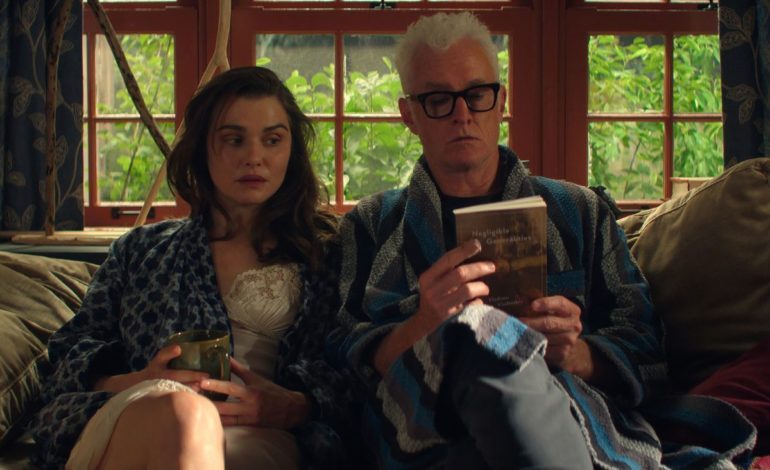
Netflix has unveiled a first look at Vladimir, an eight-episode psychological drama starring Rachel Weisz (The Favourite, The Constant Gardener), and according to Tudum by Netflix, the series leans hard into obsession, desire, and the stories we tell ourselves to survive dissatisfaction. Set to premiere March 5, the show casts Weisz as a stalled academic whose inner life becomes far more vivid than her reality, drawing viewers directly into her increasingly unhinged point of view.
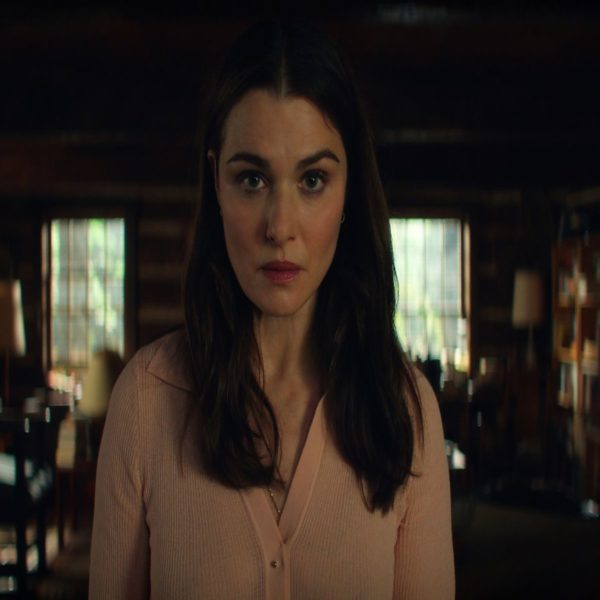
Adapted by Julia May Jonas (Vladimir author, Bright Lights) from her 2022 novel, the series follows a middle-aged professor whose fixation on a younger colleague begins to consume her, per Tudum. That colleague, Vladimir, is played by Leo Woodall (One Day, The White Lotus), whose charm and ambiguity fuel both the protagonist’s creative rebirth and psychological unraveling. Jonas uses obsession as a lens to interrogate aging, female desire, and who society allows women to want and how loudly according to Tudum by Netflix.

At home, the protagonist’s life is just as complicated. Her marriage to fellow professor John, portrayed by John Slattery (Mad Men, Spotlight), is strained after years of an open relationship and further destabilized by a sexual assault case brought against him, as detailed by Tudum by Netflix. Their daughter Sid, played by Ellen Robertson (The Sinner, Law & Order: SVU), keeps her distance, underscoring the isolation that drives her mother deeper into fantasy and fixation, a dynamic Tudum frames as both tragic and darkly comic.
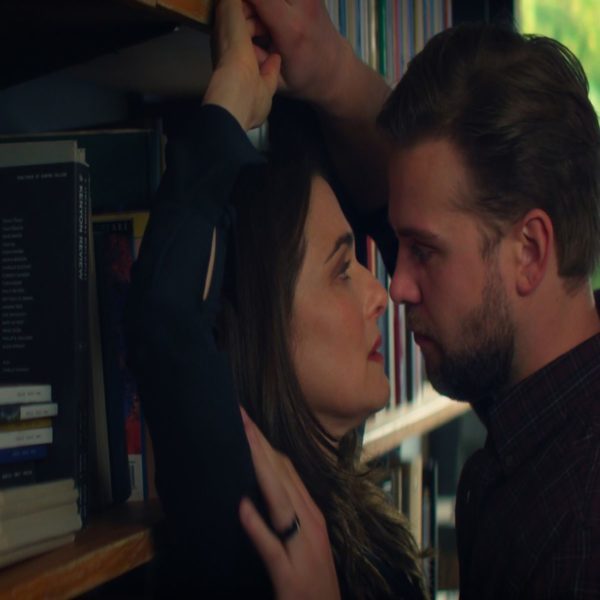
The arrival of Vladimir and his wife Cynthia played by Jessica Henwick (The Matrix Resurrections, Iron Fist) acts as the spark that fully ignites the series’ central obsession, Tudum by Netflix reports .As the protagonist spirals, the show blurs the line between flirtation and projection, reality and desire, forcing viewers to constantly question what’s real and what’s filtered through fantasy. Woodall has noted that even Vladimir’s intentions are deliberately left open to interpretation.

Stylistically, Vladimir leans into intimacy, with Weisz frequently breaking the fourth wall to address the audience directly, a choice Tudum says mirrors the unreliable nature of self-narration. Executive produced by Weisz herself (Dead Ringers, Disobedience), the series embraces mischief, discomfort, and emotional volatility, positioning its heroine as a messy, compelling antihero. As Tudum by Netflix puts it, Vladimir isn’t about the reality of obsession it’s about the intoxicating feeling of wanting something just out of reach.
Images from Netflix Media Center.